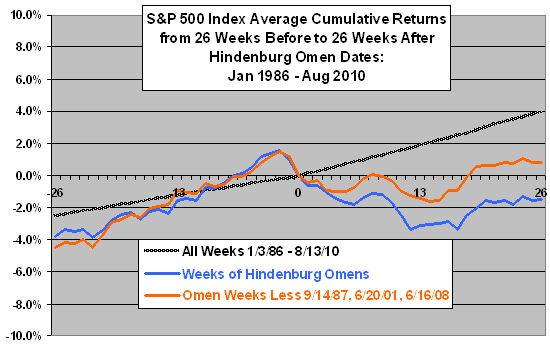
Si moltiplicano sul web i profeti di sventura: eccitati dall'Hindenburg Omen, dalle prospettive di deflazione e dai dati sempre più deprimenti sull'occupazione negli Stati Uniti in molti si chiedono se quest'autunno assisteremo a una replica del collasso dei mercati dell'autunno del 2008.
In questo articolo il Wall Street Journal ricapitola 10 buone ragioni per essere cauti e prepararsi al peggio. Ve le elenco qui di seguito rinviandovi all'articolo per il commento:
1. The market is already expensive.
2. The Fed is getting nervous.
3. Too many people are too bullish.
4. Deflation is already here.
5. People still owe way too much money.
6. The jobs picture is much worse than they're telling you.
7. Housing remains a disaster.
8. Labor Day is approaching.
9. We're looking at gridlock in Washington.
10. All sorts of other indicators are flashing amber.
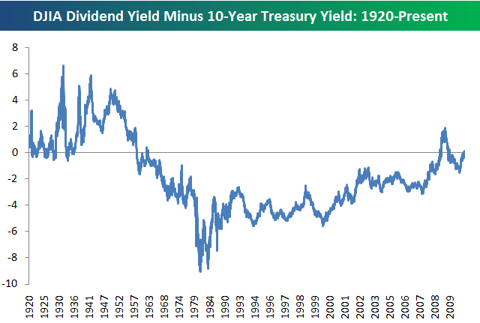
Abbiamo già discusso più volte come le azioni siano relativamente a buon prezzo se confrontate alle obbligazioni, specialmente se si ha un po' di fiducia nelle previsioni per gli utili del 2011 (e questa è veramente una scommessa). Lo scenario macro si è certamente indebolito negli ultimi mesi, anche se
la curva dei tassi di interesse non sembra ancora segnalare guai in vista (ma anche in questo caso occorre un po' di cautela, visto l'intervento delle banche centrali sui mercati obbligazionari): come giustamente commenta il WSJ
What message then is in the yield curve fortune cookie? For now, it seems to be: dimmer recovery, but not quite lights out.
Se tuttavia si allarga lo sguardo al mondo intero è difficile trovare ragioni per essere ottimisti: tra una bolla immobiliare che aspetta di esplodere (Cina), i numerosi problemi geopolitici irrisolti o aggravati dalle politiche più o meno irresponsabili e/o contraddittorie degli ultimi anni, il debito sovrano che avanza in quasi tutto il mondo, le siccità e le inondazioni, insomma con tutto quello che può andare storto, anche senza invocare
il saggio Murphy (
if anything can go wrong it will), sembra una buona idea prepararsi per il peggio, per un cigno nero particolarmente antipatico, e
investire una quota del proprio portafoglio di conseguenza, puntando sull'Armageddon.
Secondo il Wall Street Journal
A growing number of money managers and financial firms are rolling out investment products designed to exploit big declines known as "black swan" events. Most of the products are geared toward institutional investors such as pension funds, endowments and high-net-worth families—but black-swan strategies are trickling down to Main Street as well.(...)The basic idea behind Mr. Taleb's black-swan strategy is to keep most of your money ultrasafe, and to bet a small portion—say 10%—on options contracts or other speculative bets whose prices will soar during a market panic.
Funziona? Pare di sì!
Funds run by Universa Investments LP, a Santa Monica, Calif., hedge fund managed by Mr. Taleb's longtime collaborator Mark Spitznagel, gained more than 100% in 2008.
Lo straordinario successo del fondo Universa ha dato origine a più di 20
hedge funds che impiegano strategie destinate ad essere premiate in caso di avvenimenti rari, tipicamente sottostimati e spesso ignorati nella progettazione dei prodotti di ingegneria finanziaria
.
Some of these specialized funds aim to profit when markets tank. Others are designed to protect against a market plunge but still profit when markets rise. Investors don't typically put all of their money into these funds—but they are putting in more these days.
Retail investors are getting more access to black-swan-oriented strategies, too. Bond-fund giant Pacific Investment Management Co., or Pimco, has recently begun using tail-risk strategies in its Pimco Global Multi-Asset Fund, which launched in October 2008; in its RealRetirement target-date funds; and in its new equity funds launched this year. The firm also has filed a registration statement with regulators to offer exclusive "private placement" investments to well-heeled investors using tail-risk hedging strategies.
Some individual investors even are considering setting up black-swan portfolios of their own. "The 2008 downturn got me thinking that black swans can happen and will happen," says Justin McCurry of Raleigh, N.C. The 30-year-old transportation engineer says he is thinking of putting a small portion of his portfolio into options as a way to "limit downside or to pick up some extra money if things went crazy."
Una delle ragioni principali all'origine del successo di questi fondi è lo spettacolare insuccesso della diversificazione come strumento difensivo nel 2008, quando quasi tutti gli asset sono affondati all'unisono (con l'eccezione delle obbligazioni del Tesoro, ma non ci scommetterei di nuovo se si ripresentasse un panico di proporzioni simili a quello dell'autunno 2008).
Diversification "works most of the time, but when it doesn't work, those times really kill you," says John Liu, who heads up Citi Portfolio Solutions, a newly formed unit at Citigroup Inc. dedicated to developing and managing tail-risk hedging strategies for institutional investors.
But black-swan investing has its risks, too. The biggest: When markets are behaving normally, the strategy can miss out on a rising stock market—even as costs add up.
That is because the strategy typically involves buying lots of out-of-the-money "put" options on everything from stock indexes and interest rates to currencies. Put options confer the right to sell the underlying instrument if the price falls to a certain level. Because they offer protection, their values soar during market panics, producing big profits for the holders. But if the market doesn't plunge, the options expire worthless, and the investor must buy new options to replace the old ones. (...)
Another risk: Because black-swan events are so unpredictable, the markets' reactions to them can be equally unpredictable. Just because an approach worked last time doesn't mean it will work in the future.
Per chi vuole tentare il fai-da-te la ricetta originale è ancora la migliore, e non troppo difficile da realizzare:
In "The Black Swan," Mr. Taleb recommends a "barbell" strategy in which investors put 85% to 90% of their portfolios in extremely safe instruments, like Treasury bills, and the remaining 10% to 15% in highly speculative bets such as options.
That strategy is designed to lose a little bit during most years and to profit handsomely when markets tank.
Chi è poù sofisticato può anche usare le opzioni in modo più profittevole e smalizato (con qualche rischio in più):
One alternative is to use a hedging technique designed to allow investors to participate in rallies while staying protected during black-swan crashes. "When you eliminate your upside, you really get hammered over time," Mr. Smetters says.
His strategy aims to limit losses to 10% in a market crash but also allow for significant upside potential. To do that, he builds a type of "zero-sum collar" that uses a combination of put options to limit losses and call options to take advantage of the upside. (Whereas puts give investors the right to sell a particular security at a predetermined price, calls give investors the right to buy.) As the market rises, Mr. Smetters says, he cashes in the small gains from the call options and purchases new ones.

In quest'ultimo caso il nemico è un mercato che non va da nessuna parte, facendo scadere sia le put che le call
out of the money.
Qualcuno conosce in che modo investe il polpo Paul?

![[STUFFING]](https://lh3.googleusercontent.com/blogger_img_proxy/AEn0k_uUm6JtJWn4Y2gR6Y9JMb9EtM4bxomKrOt_pX-XgCQIx1816H1btrbbEDbgn_EOcLwdQrQneE0z97q4QzTbTyCRUnhcP7Zx8Ki57HlUKGV4e17SYFZ29oWdCsQHkmN7qzIiGujpnvB8sIPZq9TGBCVNg5g=s0-d)

![[IMF]](http://sg.wsj.net/public/resources/images/WO-AC366B_IMF_NS_20100901214301.gif)


![[SCISSORS]](https://lh3.googleusercontent.com/blogger_img_proxy/AEn0k_vGMBeHgySmhA9pkPjJud5Lgrq82VqQY1BY5Cn5EyEcL4FeRHsvEh-uQrodxqJcKAsCaHsMHiO65x_LdzNAwNObZLHOUuLSW6T2oFTUSkcwSFCKo7wYqiK0veTNd2ZfUaewtfW9US38-K-QmQfmn1XUGPA=s0-d)




 Post
Post


