Visualizzazione post con etichetta derivati. Mostra tutti i post

martedì 31 maggio 2011

Nostalgia del passato o saggezza utile per il futuro?

Dal New York Times un racconto di un banchiere di altri tempi: Robert G. Wilmers.

For nearly 30 years, Wilmers has run the M&T Bank, based in Buffalo. When he took it over, M&T had $2 billion in assets; today, its assets exceed $68 billion, and it's one of the most highly regarded regional bank holding companies. It has also been one of the best performing stocks in the Standard & Poor's 500-stock index; indeed, M&T was one of only two banks in the S.& P. 500 that didn't cut its dividend during the financial crisis. Wilmers's report, however, was less about the company's numbers than about the dismal state of his beloved profession. Wilmers, it turns out, is that rarest of birds: a banker willing to tell harsh truths about banking. That, for instance, much of the money the big banks earn comes from trading profits "rather than the prudent extension of credit that furthers commerce." That derivatives had helped bring about the crisis and needed to be regulated. That bank executives were wildly overpaid. That the biggest banks -the Too Big to Fail Banks -were operating, as he put it, an "unsafe business model."
Secondo Wilmers un'industria un tempo relativamente semplice e con uma naturale avversione per il rischio
"It has become a virtual casino," he replied. "To me, banks exist for people to keep their liquid income, and also to finance trade and commerce." Yet the six largest holding companies, which made a combined $75 billion last year, had $56 billion in trading revenues. "If you assume, as I do, that trading revenues go straight to the bottom line, that means that trading, not lending, is how they make most of their money," he said. This was a problem for several reasons. First, it meant that banks were taking excessive risks that were never really envisioned when the government began insuring deposits -and became, in effect, the backstop for the banking industry. Second, bank C.E.O.'s were being compensated in no small part on their trading profits -which gave them every incentive to keep taking those excessive risks. Indeed, in 2007, the chief executives of the Too Big to Fail Banks made, on average, $26 million, according to Wilmers -more than double the compensation of the top nonbank Fortune 500 executives. (Wilmers made around $2 million last year.) Finally -and this is what particularly galled him -trading derivatives and other securities really had nothing to do with the underlying purpose of banking. He told me that he thought the Glass-Steagall Act -the Depression-era law that separated commercial and investment banks -should never have been abolished and that derivates need to be brought under government control. "It doesn't need to be studied for two years," he said. "I would put derivative trading in a subsidiary and tax it at a higher rate. If they fail, they fail."

Le opinioni del Sig. Wilmers sono nette e forse un po' semplicistiche, ma se siete curiosi potete trovare l'articolo
qui: il titolo scelto dal NYT è: The Good Banker
Sull'argomento del rischio sistemico, le banche e i derivati potete anche dare un'occhiata a questo post:
I derivati e il rischio sistemico
Published with Blogger-droid v1.6.9

martedì 17 maggio 2011

I derivati e il rischio sistemico

I mercati finanziari, così come quelli assicurativi, hanno tra i loro scopi fondamentali quello di consentire una più efficiente allocazione del rischio. Negli ultimi decenni i derivati sono stati il mezzo preferito sia 
per la gestione che per la condivisione del rischio tra agenti diversi. La crisi finanziaria del 2007-2008
ha reso evidenti alcuni limiti di questo approccio. Qui sotto potete leggere la presentazione 
su questo argomento che ho fatto oggi al convegno EDHEC-ICFR dedicato alla gestione del rischio di impresa
nelle imprese assicurative. La presentazione si basa su un modello che Fulvio Corsi, Hykel Hosni ed io stiamo sviluppando alla Scuola Normale. In sostanza diamo una definizione di derivato "cooperativo" o "socialmente utile" 
quando la sua introduzione nel mercato consente un output aggregato dell'economia superiore (o uguale) senza aumentare (o diminuendo) il rischio sistemico del quale diamo anche una definizione molto (anzi troppo!!) semplice. Alla prova dei fatti alcuni derivati possono essere cooperativi altri invece decisamente no...
Se siete curiosi di saperne un po' di più potete leggere un primo articolo (poco tecnico) qui. 
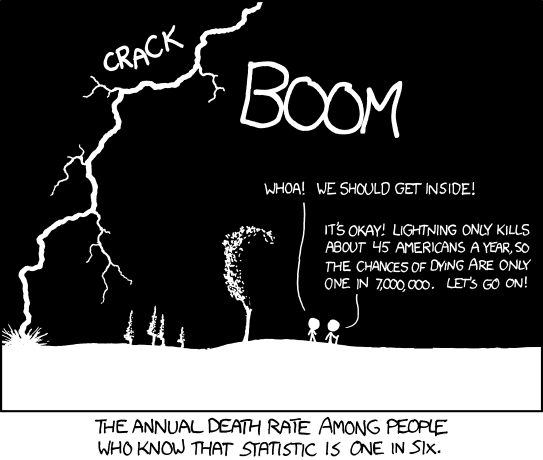
Se invece siete stanchi andate qui (seguite il mio consiglio: andateci anche se non siete stanchi!) dove  troverete altre vignette come quella che ho messo qui accanto, intitolata CONDITIONAL RISK (ne ho cercata una dedicata al rischio sistemico ma non l'ho trovata purtroppo!)
edhec_marmi

martedì 14 dicembre 2010

Le nove sorelle e le inefficienze del mercato dei derivati

Da almeno un paio di anni si discute sull'opportunità e sulle modalità della creazione di un mercato regolamentato per i derivati, soprattutto, ma non solo, per i CDS (Credit Default Swap). Alfa o Beta? si è occupato di questo tema più volte (per esempio in questo post e anche qui). Un lungo articolo pubblicato ieri sul New York Times racconta le resistenze da parte delle grandi banche a ogni ipotesi di riforma del mercato dei derivati, dalle cui inefficienze traggono profitti davvero importanti. Si tratta di un mercato enorme, con un nozionale complessivo sfiora i 600mila miliardi di dollari. Negli anni Cinquanta e Sessanta si parlava delle sette sorelle che controllavano la maggior parte della produzione del petrolio e attraverso di essa il ciclo economico; la versione contemporanea di questo oligopolio ha rimpiazzato il petrolio con i derivati e di sorelle ne ha nove... le nove sorelle che controllano i mercati dei derivati sono JPMorgan,  Morgan Stanley,  Deutsche Bank, UBS, Barclays, Credit Suisse, Goldman Sachs, Bank of America e Citigroup.

venerdì 2 luglio 2010

Un uomo prudente.

Joseph Cassano era il responsabile dell'unità di A.I.G. che eseguiva le transazioni sui derivati legati al mercato dei mutui. E' proprio attraverso queste transazioni che A.I.G. accumulò straordinarie perdite che richiesero l'intervento della Fed e del Tesoro U.S.A. per evitarne il fallimento e l'innesco di uno straordinario "effetto domino" che avrebbe probabilmente portato al fallimento di molte altre banche, assicurazioni, ecc. Mercoledì scorso è stato interrogato dalla commissione che analizza le cause della crisi finanziaria e ha difeso con decisione le sue azioni, sostenendo che le sue decisioni erano state "prudenti" e che non c'era necessità di un bailout di A.I.G costato almeno 132 miliardi di dollari. In particolare Cassano sostiene di non aver commesso errori nella valutazione del rischio delle transazioni nel mercato dei derivati sui mutui subprime:
AIG's problems, he said, were brought on by a liquidity crisis when credit markets seized up— and weren't a result of lax underwriting practices or defaults among mortgage assets his unit had insured. When market values of those assets plunged, the firm was deluged by demands for cash collateral from banks that had bought the insurance from his unit, AIG Financial Products.  
"I think I would have negotiated a much better deal for the taxpayer than what the taxpayer got" when the government and AIG in late 2008 paid tens of billions of dollars to banks to cancel the insurance-like contracts AIG wrote on mortgage securities, said Mr. Cassano


Secondo il WSJ Cassano ha ricevuto 300 milioni di dollari di compensi da A.I.G. per il lavoro svolto.

Qui potete leggere il resoconto sul Wall Street Journale mentre qui sotto potete vedere un video sullo stesso argomento, anch'esso tratto dal portale del WSJ.


lunedì 21 giugno 2010

It is not rocket science! E se gli stress test sono troppo poco stressanti?

Leggevo poco fa un articoletto sul Wall Street Journal di qualche giorno fa che commentava l'incredibile dimensione assunta dai derivati e da come la maggior parte di questi fossero in possesso di banche commerciali:
Right now, U.S. banks, mostly a few giants, have $276 trillion in over-the-counter derivatives, instruments that don't trade on exchanges. Most of these derivatives are within commercial-bank subsidiaries that enjoy federal deposit insurance. Thus, the banks effectively enjoy a government subsidy that likely distorts prices and allows them to hold too little capital against the derivatives. 
La questione preoccupa (giustamente) molti e numerose sono le proposte per la creazione di mercati regolamentati per la maggior parte di questi prodotti. Ma la sorpresa è venuta leggendo i commenti all'articolo: infatti ne ho trovato uno di Vernon Smith! Eccolo: It is not rocket science. Derivatives are securities, and should have been, and now should be, registered, listed and subject to reserve requirements....Vernon L. Smith, Chapman University

 Ancora dal Wall Street Journal un articolo esamina la decisione europea di rendere pubblici i risultati degli stress test bancari (decisione condivisa dall'87% dei lettori del WSJ), cosa che dovrebbe avvenire entro la fine di luglio, almeno per i 25 maggiori istituti europei (inclusa dunque Unicredito e Banca Intesa). Ma saranno stati abbastanza severi? Scrive il WSJ:  European authorities, though, have had a particularly knotty problem to resolve. It concerns what stresses the banks should be tested for and how much of that should be disclosed. In the U.S. exercise, authorities examined the impact on the banks' balance sheets of a serious downturn in the economy, and the consequent rise in variables such as unemployment and bad mortgage loans. To be credible, however, European bank stress tests will need to contemplate eventualities that governments don't want to admit are possible, such as defaults on Greek, Portuguese and even Spanish debt. Over the past year, those worries came to the fore among European policymakers, officials said. But the bulk of the opposition came from Germany, whose Landesbanken share the main spotlight of market worry with Spain's regional savings banks, or cajas.
Germany's main banking associations have expressed vehement opposition to publishing stress tests, claiming markets might "misinterpret" the results, and arguing that German law requires banks' consent before disclosing stress-test results. The German government said Thursday it plans to seek banks' consent, but a finance-ministry official said a change in the law is also possible if banks don't cooperate.
Spain's intention to publish its own results left Germany with little choice but also to show its cards, one European official said, lest it be seen as having something to hide.
While the stress tests may shore up confidence, they come with their own costs. The heaviest: What to do with banks that fail the exam. Most European countries are now racing to embrace a newfound philosophy of fiscal prudence to ward off concerns about their own deficit and debt levels. Shelling out for pricey bank rescues would imperil those efforts.


Sull'argomento torna oggi il WSJ con un commento dai torni piuttosto scettici:


European leaders may have hoped to draw a line under Europe's sovereign crisis by agreeing to publish individual bank stress-test results. But that may be easier said than done. There are three questions that matter when stress-testing banks: Which are being tested? What is being tested? And what will be done with the results? It isn't clear that what is being contemplated will provide convincing answers to any of them.
What the leaders appear to have agreed on—and there are mixed messages across Europe over this—is to publish bank-by-bank results of a stress test currently being conducted by the Committee of European Bank Supervisors. But if that is all they have got to offer, it isn't going to convince anyone. This particular test covers about 25 of the largest European banks, excluding the majority of Spanish and German savings banks whose potential capital deficits most worry the markets.
Nor is it likely to be particularly stressful. Like the last CEBS stress test in 2009, it is based on average European growth and asset prices scenarios that don't take account of national variations. The criteria are less demanding than those applied by some national regulators, including the U.K.'s Financial Services Authority, being based on a plausible scenario rather than a worst-case one, according to someone familiar with the process.
Finally, it isn't clear that CEBS will be able publish bank-by-bank results even if it wants to since it is against European law for regulators to divulge data gathered from banks that they supervise.