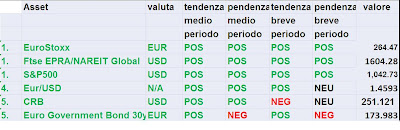
domenica 27 dicembre 2009

La crisi finanziaria e i derivati. La riforma sanitaria. Roubini e l'oro. Aggiornamento al 24 dicembre 2009

Continuano le polemiche sul ruolo ambiguo tenuto dalle banche di investimento negli anni immediatamente precedenti la crisi finanziaria: il New York Times dedica un lungo articolo ai CDO sintetici costruiti e venduti da Goldman Sachs:

Pension funds and insurance companies lost billions of dollars on securities that they believed were solid investments, according to former Goldman employees with direct knowledge of the deals who asked not to be identified because they have confidentiality agreements with the firm.

Goldman was not the only firm that peddled these complex securities — known as synthetic collateralized debt obligations, or C.D.O.’s — and then made financial bets against them, called selling short in Wall Street parlance. Others that created similar securities and then bet they would fail, according to Wall Street traders, include Deutsche Bank and Morgan Stanley, as well as smaller firms like Tricadia Inc., an investment company whose parent firm was overseen by Lewis A. Sachs, who this year became a special counselor to Treasury Secretary Timothy F. Geithner.


How these disastrously performing securities were devised is now the subject of scrutiny by investigators in Congress, at the Securities and Exchange Commission and at the Financial Industry Regulatory Authority, Wall Street’s self-regulatory organization, according to people briefed on the investigations.

Ai derivati e al loro ruolo nella recente crisi finanziaria è dedicato una bella intervista di Satyajit Das, autore dell'eccellente Traders, Guns and Money. Secondo Das

Relatively simple derivative products provide ample scope for risk transfer. Increasingly complex and opaque products are used to increase risk and leverage as well as circumvent investment restrictions, bank capital rules, securities and tax legislation.
Few, self interested industry participants are prepared to admit the unpalatable reality that much of what passes for financial innovation is specifically designed to conceal risk or leverage, obfuscate investors and reduce transparency. The process is entirely deliberate. Efficiency and transparency is not consistent with high profit margins on Wall Street and the City. Financial products need to be opaque and priced inefficiently to produce excessive profits.
To control this would require banning certain types of derivative and preventing them form being used other than for hedging, exactly the same as insurance.
Until regulators and legislators understand and are prepared to address these central issues, no meaningful reform in the control of derivative trading will be possible.


Mentre il New York Times si occupava di rendere il Natale un po' meno dolce per alcuni banchieri,
almeno dal punto di vista reputazionale, il Senato USA approvava la riforma sanitaria facendo un bel regalo al presidente Obama e riempiendo di gioia Paul Krugman:

Indulge me while I tell you a story — a near-future version of Charles Dickens’s “A Christmas Carol.” It begins with sad news: young Timothy Cratchit, a k a Tiny Tim, is sick. And his treatment will cost far more than his parents can pay out of pocket.


Fortunately, our story is set in 2014, and the Cratchits have health insurance. Not from their employer: Ebenezer Scrooge doesn’t do employee benefits. And just a few years earlier they wouldn’t have been able to buy insurance on their own because Tiny Tim has a pre-existing condition, and, anyway, the premiums would have been out of their reach.

But reform legislation enacted in 2010 banned insurance discrimination on the basis of medical history and also created a system of subsidies to help families pay for coverage. Even so, insurance doesn’t come cheap — but the Cratchits do have it, and they’re grateful. God bless us, everyone.


O.K., that was fiction, but there will be millions of real stories like that in the years to come. Imperfect as it is, the legislation that passed the Senate on Thursday and will probably, in a slightly modified version, soon become law will make America a much better country.


Nouriel Roubini avverte che l'oro potrebbe essere in una bolla:

But the recent price surge looks suspiciously like a bubble, with the increase only partly justified by economic fundamentals.

Gold prices rise sharply only in two situations: when inflation is high and rising, gold becomes a hedge against inflation; and when there is a risk of a near depression and investors fear for the security of their bank deposits, gold becomes a safe haven.

 
The last two years fit this pattern.

Come sempre Roubini ama parlare chiaro, e mi piace molto proprio per questo... ecco come finisce il suo articolo sull'oro:
 
The recent rise in gold prices is only partially justified by fundamentals. Nor is it clear why investors should stock up on gold if the global economy dips into recession again and concerns about a near depression and rampant deflation rise sharply. If you truly fear a global economic meltdown, you should stock up on guns, canned food, and other commodities that you can actually use in your log cabin.


Ecco l'aggiornamento al 24 dicembre.


lunedì 21 dicembre 2009

La scomparsa di Paul Samuelson. Aggiornamento al 18 dicembre 2009

La settimana appena trascorsa è iniziata con la notizia della morte di Paul Samuelson: raccomando a tutti la lettura del necrologio apparso sul New York Times di lunedì scorso. Breve, incisivo e naturalmente un po' polemico è il ricordo di Samuelson scritto da Paul Krugman qualche giorno dopo: La Voce ne fornisce una traduzione in italiano. Scrive Krugman:

Ci sono stati i ricci e ci sono state le volpi. E poi c’è stato Paul Samuelson.
Il riferimento è naturalmente alla famosa distinzione tra pensatori di Isaiah Berlin: le volpi, che sanno molte cose, e i ricci, che ne sanno una sola grande. Ciò che ha fatto di Samuelson un pensatore economico unico, come nessun altro passato o presente, è stato il fatto che sapeva, e ci ha insegnato, molte grandi cose. Nessun economista ha mai avuto così tante idee fondamentali.
Con un piccolo aiuto di Google Scholar, ho compilato una lista di alcune grandi idee di Samuelson. Dico “alcune” perché non sono sicuro che l’elenco sia completo. Ma in ogni caso ecco otto (otto!) intuizioni fondamentali, ognuna delle quali ha dato luogo a una vasta e continua letteratura.


L'Economist ricorda l'opposizione di Samuelson alle posizioni libertarie di Milton Friedman e della scuola di Chicago:

Though regarded as America’s leading standard-bearer for Keynesian economics, he called himself a “cafeteria Keynesian”, just picking the bits he liked. His combination of Keynesian and classical economic ideas became known as the “neoclassical synthesis”. From his chair at the Massachusetts Institute of Technology and in his column in Newsweek, the self-described “dull centrist” became a fierce critic of the libertarian Chicago School, and especially of Milton Friedman (writer of a rival Newsweek column). Markets are not perfect, he believed, and dire warnings from Friedman, and earlier from Friedrich von Hayek, about the regulation of markets “tells us something about them rather than something about Genghis Khan or Franklin Roosevelt. It is paranoid to warn against inevitable slippery slopes…once individual commercial freedoms are in any way infringed upon.”

La posizione critica di Samuelson (riscopritore di Bachelier e padre insieme a Fama dell'ipotesi dei mercati efficienti) nei confronti del laissez-faire, pare si fosse accentuata negli ultimi due anni:

Yet Mr Samuelson also understood that beyond the ivory tower the conditions necessary for efficient markets rarely existed; they needed regulating. “To understand economics you need to know not only fundamentals but also its nuances,” Mr Samuelson would explain. “When someone preaches ‘Economics in one lesson’ I advise: Go back for the second lesson.” The latest crisis (for which he felt some responsibility, since he had helped develop financial derivatives that company executives did not understand) proved that “free markets do not stabilise themselves. Zero regulating is vastly suboptimal to rational regulating. Libertarianism is its own worst enemy!”

Ecco l'aggiornamento al 18 dicembre 2009: da notare l'ulteriore rafforzamento del dollaro, apparentemente
senza provocare scossoni sugli asset più rischiosi (azioni e materie prime) che si mantengono vicini ai massimi da inizio anno.


mercoledì 16 dicembre 2009

Italia batte Grecia ma l'euro continua a indebolirsi

La Voce di oggi pubblica due articoli sul debito della Grecia: in uno di questi viene svolto un confronto con quello italiano dal quale sembrerebbe che le nostre finanze, a differenza di quelle greche, potrebbero beneficiare molto della ripresa economica e dall'aumento dell'inflazione. 


L'euro si indebolisce ulteriormente rispetto al dollaro, avvicinandosi a quota 1,45: una parziale spiegazione potrebbe venire dal dato sorprendente sull'inflazione USA di novembre e sulle attese di  possibili reazioni della Fed domani. Scrive il New York Times di oggi: Although the market does not anticipate any changes in the Fed’s current policy of holding interest rates near zero, even a slight change in the Fed’s tone can cause an impact on investor sentiment as cheap money has been one of the main agents of the stock market’s rally.


Forse però l'euro risente anche dell'attenzione ritrovata per i P.I.G.S. (Portugal, Italy, Greece and Spain): John Mauldin torna oggi sulla questione, dopo averla affrontata in dettaglio già all'inizio di quest'anno. 

martedì 15 dicembre 2009

Abu Dhabi salva il Dubai. Come sarà il 2010?

Una giornata positiva oggi per i mercati azionari, galvanizzati prima dalla notizia che Dubai ha ricevuto 10 miliardi di dollari USA dal vicino Abu Dhabi, allontanando i timori di un default dell'emirato,  poi dall'acquisto di XTO Energy da parte di Exxon con un'offerta interamente finanziata da azioni che valuta la compagnia 41 miliardi di dollari (comprendendo un debito di 11 miliardi). La partita Dubai non mi pare comunque conclusa: se volete approfondirla troverete utile questo articolo su La Voce di qualche giorno fa. Intanto se vi affascinano i movimenti dei CDS (Credit Default Swaps) potete seguirli gratuitamente qui.

In Europa continua il balletto delle cifre e dei provvedimenti necessari per riportare il debito greco sotto controllo: se volete seguirlo da vicino potete usare questo link con gli approfondimenti del Financial Times. 


Si avvicina la fine dell'anno e sull'aereo che mi portava a Parigi ieri leggevo le previsioni di The world in 2010 (a cura dell'Economist). Come sarà il 2010? Si respira un cauto ottimismo, ma poi nella cassetta della posta elettronica trovo il grafico che vi riporto qui sotto 

e una parte dell'ottimismo svanisce...

sabato 12 dicembre 2009

Letture per le vacanze e le lezioni di Soros- Aggiornamento all'11 dicembre 2009.

Siccome si avvicinano le vacanze e anche chi è molto indaffarato potrebbe ritorvarsi con un po' più di tempo libero, ecco alcuni libri che ho appena finito di leggere e che vi potrebbero interessare:
Non sono sempre d'accordo con Krugman, ma scrive benissimo e la sua spiegazione del ciclo economico e delle recessioni mediante la storia della cooperativa di babysitting è assolutamente da non perdere (secondo capitolo). La parabola della Capitol Hill Baby-Sitting Co-op è divenuta così celebre da meritare una voce su Wikipedia, l'articolo di Joan e Richard James Sweeney su cui si fonda lo potete leggere qui.

Ecco cosa sto leggendo in questi giorni:

Il libro di Narang l'ho comprato dopo aver letto delle recensioni molto favorevoli. Sono un po' deluso, è una rassegna di tecniche utilizzate nella gestione quantitativa degli hedge funds che non entra mai nel tecnico. Sembra essere stato scritto avendo in mente potenziali investitori (giustamente) preoccupati su cosa accada in questi misteriosissimi fondi.
Se siete incuriositi da questi argomenti troverete interessante anche questa intervista a Cliff Asness


Ammetto di essere un ammiratore di George Soros, quindi il mio giudizio potrebbe non essere completamente neutro. Però vi consiglio ugualmente di dare un'occhiata alle George Soros Lectures  ospitate sul sito del Financial Times.

Infine a chi sta riesaminando i risultati dei propri investimenti nel 2009 (e magari considerando di rivolgersi a un consulente finanziario - preferibilmente indipendente - per la gestione dei propri investimenti) oltre a raccomandare la lettura del libro di Faber e Richardson indicato sopra, dedico la vignetta qui sotto:


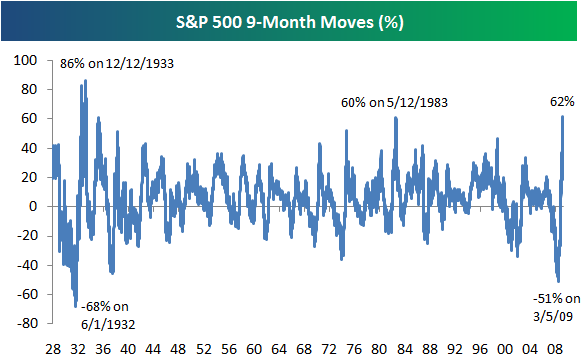
 La settimana che si è appena conclusa ha visto un notevole indebolimento del dollaro, delle materie prime e delle azioni europee. L'indice S&P500 rimane invece abbastanza tonico con una corsa del 62% negli ultimi nove mesi: (il grafico è tratto un recente post di Bespoke Investment Group su SeekingAlpha)


Non mi stupirebbe se ci fosse una correzione o una fase laterale abbastanza lunga a questo punto...vedremo. Ecco l'aggiornamento all'11 dicembre 2009.


martedì 8 dicembre 2009

Qualche approfondimento sul Dubai.

Il Financial Times offre un approfondimento sulla crisi del debito di Dubai così come mantiene ormai da mesi una pagina dedicata agli aggiornamenti sulla crisi islandese (forse più interessante per alcuni sfortunati investitori italiani). Secondo Gary Jenkins, un analista esperto di obbligazioni e di debito sovrano, è abbastanza probabile che nei prossimi 12-24 mesi assisteremo ad altre crisi simili a quella del Dubai.
Secondo l'Economist la crisi dovrebbe tuttavia rimanere limitata ai paesi limitrofi anche se sta conducendo il mercato a una rivalutazione dei rischi legati al debito sovrano. Il quadro non è incoraggiante, soprattutto il debito dei paesi sviluppati sembra essere poco sostenibile, tenendo conto dei problemi demografici e della crescita economica più lenta rispetto ai paesi in via di sviluppo: scrive l'Economist

Dubai is an emerging economy, but, looking forward, the developed world, where official government debt has soared, looks riskier than the faster-growing big emerging economies, whose public debt burden may well fall. In 2007 average government debt in the G20’s big rich economies, at just under 80% of GDP, was double that of big emerging economies. By 2014 the ratio, at 120% of GDP, could be more than three times higher. That alone will challenge old rules of thumb about the relative riskiness of emerging-market debt. But it will not be the only change. The scale of contingent liabilities, such as government guarantees on bank debt, differs hugely between countries, with a far bigger increase in the rich economies at the heart of the crisis. And don’t forget local public finances. Plenty of American states are in a pretty dire situation.
The reassessment of sovereign risk will hover over the world economy for years, but its impact is already being felt. Capital is flooding to the bonds of big emerging economies, squeezing yields and pushing up their currencies. In the rich world the jitters of potential investors are framing today’s fiscal debate, even as output remains depressed and bond yields low. Thanks to the bigger, friendlier new IMF, emerging economies can count on more outside support than they used to. In contrast, some rich countries have fewer options. Euro membership, for instance, has removed the option of quasi-default via inflation for the heavily indebted on Europe’s periphery. And some countries are more determined to deal with this than others: Ireland has raised taxes and cut spending, but Greece has shown scant appetite for austerity.

Seeing through the sandstorm

If sovereign risk is back as a worry, what should indebted governments do? Two things stand out: fiscal transparency and a clear path to medium-term government prudence. The latter does not mean abandoning fiscal stimulus prematurely, but laying out a credible plan for how debt will be brought under control once the recovery strengthens. Greater clarity on the limits of government liabilities and burden-sharing would also help. The euro area, for instance, would be far better off with a clear set of rules governing sovereign crises within its borders. The alternative is clumsy, unpredictable, one-off decisions—in other words, more episodes like Dubai. 

Se vi piacciono le montagne russe ecco un grafico (fornito da Bespoke Investment Group) dell'andamento del mercato azionario del Dubai dal 2004 ad oggi: From the start of 2004 to November 9th, 2005, the DFM General rose a whopping 748% as oil prices shot up along with the global economy. After the DFM General peaked on 11/9/05, however, it declined 57% over the next year and a half. The index staged a 72% snap-back rally from 4/3/07 to 1/15/08, but then it jumped on the global meltdown bandwagon and has declined 71% since then. Currently, the DFM General is down 78% from its peak on November 9th, 2005, but it is still up 83% since the start of 2004. 

Dubai04

domenica 6 dicembre 2009

Un anno di alfaobeta: qualche simulazione di portafogli e l'aggiornamento al 4 dicembre 2009

 Alfaobeta compie un anno! Il mio primo post presentava l'asset allocation tattica proposta da Mebane Faber in  A Quantitative Approach to Tactical Asset Allocation: l'idea è quella di investire in pochi asset non fortemente correlati tra loro, ed eventualmente di evitare le fasi più turbolente del mercato con uno switch a liquidità quando gli indici scendono al di sotto della media mobile su 200 giorni. Se volete vedere un'analisi statistica della significatività dei risultati potete dare un'occhiata al working paper A Quantitative Approach to Faber's Tactical Asset Allocation.

Per festeggiare il compleanno, e per darvi qualche elemento di riflessione, 
ho simulato 10 portafogli (corrispondenti a 10 giorni consecutivi diversi di partenza) a ciascuno dei quali è stato applicata la strategia di Faber (investire nell'asset se l'indice supera la media mobile a 200 giorni, investire in liquidità altrimenti) con un controllo ogni 2 settimane e ribilanciamento annuale. Il periodo considerato va dal 1991 ad oggi e gli asset in portafoglio sono
- azioni europee indice stoxx 600, peso 25%
- azioni USA indice SP500, peso 25%
- obbligazioni del Tesoro USA a 10 anni, peso 30%
- indice DJ-UBS agricoltura, peso 5%
- indice DJ-UBS oro, peso 5%
- indice DJ-UBS petrolio, peso 10%

Gli indici azionari indicati sono di prezzo e non tengono conto dei dividendi. D'altronde non
ho tenuto conto dei costi di transazione nelle simulazioni. Il confronto con una asset allocation passiva
(ribilanciata annualmente) mostra un lieve aumento della reddtività e una sostanziale riduzione
del rischio, sia misurato mediante la volatilità sia mediante il massimo drawdown.

portafoglio passivo (25% azioni europa, 25% azioni USA, 30% obbligazioni, 5% oro, 5% agricoltura, 10% petrolio):
rendimento annualizzato: 7.03%
volatilità annualizzata:     11.2%
massimo drawdown:      29.9%

portafoglio tattico:
rendimento annualizzato: 8.49% (media dei 10 portafogli, range 7.9%-9.3%)
volatilità annualizzata:      7.91% (media dei 10 portafogli, range 7.58%-8.27%)
massimo drawdown:       9.94% (media dei 10 portafogli, range7.28%-12.21%)


Ecco l'aggiornamento al 4 dicembre 2009


domenica 29 novembre 2009

Dubai, Grecia, Italia....come dormire male la notte. Aggiornamento al 27 novembre 2009

Un caro saluto ai miei 25 lettori (magari!) dalla lontana Seul! Questa settimana Dubai ha annunciato di non riuscire a pagare i debiti, proprio mentre gli americani festeggiavano il giorno del ringraziamento e sterminavano tacchini. A proposito: conoscete immagino la metafora di Bertrand Russell per spiegare le trappole dell'induzione, nelle quali tanto spesso si cade quando si modellizzano i mercati finanziari:
Domestic animals expect food when they see the person who feeds  them. We know that all these rather crude expectations of  uniformity are liable to be misleading. The man who has fed the
chicken every day throughout its life at last wrings its neck  instead, showing that more refined views as to the uniformity of  nature would have been useful to the chicken.

Taleb riprende l'idea in un interessante saggio sui rischi dell'induzione statistica:

e poi impietosamente confronta il destino del tacchino fino al giorno di Thanksgiving con i profitti di IndyMac fino al suo fallimento
 
Polemico e a volte nemmeno troppo simpatico ma certamente non è privo di argomenti il signor Taleb. 

Comunque a proposito di rischi e di scommesse l'Economist di giovedì pubblica un interessante grafichetto sul mercato dei Credit Default Swaps dal quale è facile farsi un'idea della probabilità di default stimata per i diversi paesi: se si tiene conto delle dimensioni del debito e del GDP la situazione della Grecia è persino peggiore di quella dell'Italia, anche se non possiamo andare in giro a vantarcene...


Bene, dopo queste cattive notizie, ecco l'aggiornamento al 27 novembre scorso:


sabato 21 novembre 2009

lunedì 16 novembre 2009

domenica 8 novembre 2009

L'occupazione crolla negli USA... Aggiornamento al 6 novembre 2009

Mentre una settimana fa si celebrava il ritorno della crescita economica negli USA, il dato molto negativo sull'occupazione di venerdì scorso ha portato anche i più ottimisti a riflettere un po' sulle prospettive future dell'economia americana. Il tasso di disoccupazione è al 10.2%, il più alto dal 1982, ma quando si tiene conto di chi è sottoccupato per via della congiuntura si sale al 17.5%! Scrive a proposito il New York Times:

In all, more than one out of every six workers — 17.5 percent — were unemployed or underemployed in October. The previous recorded high was 17.1 percent, in December 1982.

This includes the officially unemployed, who have looked for work in the last four weeks. It also includes discouraged workers, who have looked in the past year, as well as millions of part-time workers who want to be working full time.

La descrizione del mercato del lavoro USA mostra come assomigli sempre di più a quello Europeo: chi sta pagando la recessione è soprattutto chi è in cerca di un lavoro per la prima volta, piuttosto che chi è già occupato:

The main reason that the unemployment rate has soared is the hiring rate has plummeted.

So fewer workers than might be expected have lost their jobs. But those without work are paying a steep price, because finding a new job is extremely difficult.

Second, wages have continued to rise for most people who still have jobs. The average hourly wage for rank-and-file workers, who make up about four-fifths of the work force, actually accelerated in October, according to the new report.

Even though some companies have cut the pay of workers, the average hourly wage has still risen 1.5 to 2.5 percent over the last year, depending on which government survey is examined. Average weekly pay has risen less — zero to 1 percent — because hours have been cut. But average prices have fallen. Altogether, the typical worker has received a 1 to 2 percent inflation-adjusted raise over the last year.

In the other two severe recessions in recent decades, workers with jobs fared considerably worse. At the same point in the mid-1970s downturn, real weekly pay had fallen 7 percent; in the early 1980s recession, it had fallen 4 percent.

It is a strange combination: workers who still have a job are doing better than in other deep recessions, but the unemployment and underemployment have risen to their highest level since the Depression.

Non c'è molto da stare allegri evidentemente. La Fed ne è ben consapevole e ha ancora una volta annunciato pubblicamente l'intenzione di mantenere i tassi exceptionally low for an extended period. C'è da pensare che il carry trade sul dollaro e il toro nei mercati azionari possano continuare ancora per un po', anche se Buttonwood invita ad essere prudenti:

The future path of quantitative easing (QE) runs into similar dilemmas. This policy allows central banks to inject money into the system by purchasing assets from the private sector. Much of the money created has been used to buy government bonds. (...) QE will not last forever. If it is abandoned before government deficits are tamed, bond yields could soar. Furthermore, central banks will presumably want to sell their bond holdings at some point, or at least not roll them over when they mature. All this debt will end up back on the market and investors should set yields accordingly.

So perhaps bond yields are being held down not by QE, but by the expectation that interest rates will be held near zero for the foreseeable future. In effect, the authorities have bribed investors to buy assets. But rates will only be held at current low levels if the economy remains weak. As Paul McCulley of Pimco, a giant bond manager, points out, the bulls who argue for a V-shaped recovery need to be careful what they wish for. The result would be a rise in interest rates that would sabotage the chief motor of this year’s rally.

Ecco l'aggiornamento al 6 novembre 2009.

mercoledì 4 novembre 2009

La lenta agonia delle banche, e di tutti noi con loro

Il fallimento di CIT ha suscitato poche reazioni nella stampa: il New York Times riassume brevemente come si è arrivati a questa decisione:

The CIT Group is a commercial lender that ran in trouble during the financial downturn of 2008. The century-old lender received a $2.33 billion taxpayer-financed bailout in December 2008.

As the lender sought desperately to avoid bankruptcy in July 2009, it argued that being forced into Chapter 11 protection would spell disaster for its customers: a wide swath of the nation's small and midsize businesses who rely on the company for financing.

On Nov. 1, CIT entered what it called a different kind of bankruptcy, one that will let it reemerge from court protection by the end of 2009 under the ownership of its creditors, who widely supported the reorganization plan. The filing marks the culmination of months of bargaining among CIT, its creditors and the federal government over the company's fate. Bank regulators concluded over the summer that even though CIT was vital to many small businesses that needed financing, the company's problems did not pose the type of systemic risk that led to the aggressive rescues of Citigroup and Bank of America.

Even so, the bankruptcy filing means taxpayers will lose the $2.3 billion investment they made in CIT as part of the government's sweeping financial rescue in 2008, marking the first such loss of the bailout program.

CIT's filing will test whether a financial company can survive the Chapter 11 process. Bankruptcy has long been considered a death knell for lenders, whose very existence depends on the confidence of its creditors and customers. It also means the end of CIT's efforts to transcend its roots as a sleepy financier of retailers, restaurants and manufacturers. The company had branched out into student lending and investment advisory services.

With $71 billion in assets and nearly $65 billion in liabilities, CIT's bankruptcy ranks among the largest in corporate history, though it is dwarfed by the bankruptcies of Lehman Brothers and Washington Mutual.

Quale sarà il destino delle banche?
Negli USA nel 2009 i fallimenti hanno già raggiunto quota 100 il peggior dato dal 1992. Scrive l'Economist

More banks have failed in other years. The post-war record was set in 1989 when 534 banks went under. That was at the peak of the savings-and-loan (S&L) crisis, which erupted in the late 1980s and continued in the early 1990s. This year has seen more failures than any since 1992, but another 75 banks must go under to overhaul that year’s total.

Counting absolute numbers of failures, however, is not the best way to assess the extent of a financial crisis. The number of banks and thrifts has fallen dramatically since the S&L era, from some 16,000 lenders then to around 8,000 now. According to CreditSights, a research firm, when the current cycle is over, the rate of bank failures may be double what it was during the S&L crisis.

The total of failures also disguises the size of individual collapses. The demise of Washington Mutual, the biggest bank to fail in America so far in this crisis, means that banks accounting for more than 3% of the system’s total assets have fallen during the current cycle already, compared with 4.4% of assets over the entire S&L episode.


Alcuni analisti sostengono che per le grandi banche sia diventato semplicemente impossibile fare profitti senza ricorrere massicciamente al trading:
There have been no obituaries. No eulogies. No burial services. But this quarter marks the death of traditional banking at the big money-center banks.
In un editoriale il New York Times mette in guardia sulle conseguenze che questi comportamenti hanno sull'economia complessiva:

The banks that do have the financial wherewithal — like Goldman Sachs and JPMorgan Chase, which made combined profits of nearly $7 billion in the third quarter — are not making their money through lending. They are making it from trading complex financial products that few people understand.

Meanwhile, sectors of the economy are being starved of credit. Consumer credit by commercial banks stood at $834 billion in August — about $45 billion less than at the end of last year. Business financing is doing no better. Banks’ outstanding commercial and industrial loans fell to $1.411 trillion in September, $170 billion less than a year earlier. Commercial paper issued by nonfinancial businesses has plummeted 40 percent over the last year.

This will not do. It is nigh impossible for economic recovery to take hold when credit is sputtering as it is. For the Obama administration’s financial strategy to be a success, the banks must do more than survive. They must lend again.

Paul Krugman chiede più stimoli per l'economia, soprattutto per combattere la disoccupazione e per ridare fiducia ai consumatori americani. L'efficacità dello stimolo e la sostenibilità del debito pubblico (e privato) americani sono sempre più oggetto di dibattito ed alimentano l'incertezza. Proprio all'incertezza e ai tentativi da parte delle banche centrali di sterilizzarne gli effetti è dedicata la colonna di Buttonwood in un commento che ho trovato ancora più ispirato del solito.
Eccone un estratto:

So you could see low rates as the “price” of uncertainty. The authorities have been forced to push interest rates close to zero in order to give investors a one-way bet. Any asset offers a higher yield than cash. Equity and corporate-bond markets have duly responded, rallying strongly this year.

But it is all rather reminiscent of Ethelred the Unready, an 11th-century king of England who paid Danegeld to buy off Viking invaders. The result was that the Danes demanded ever-bigger payments.

The price of these bribes is being paid by the cautious, such as elderly people who do not want to trust their modest nest-eggs to the vicissitudes of the stockmarket. Their income has been slashed. (...)

But penalising the prudent and rewarding speculators can, at best, only be part of the process. The real “animal spirit” that needs lifting is the willingness of banks to lend to businesses (and of the latter to borrow). So far, that process has been a failure. Figures from the European Central Bank this week showed that lending to the private sector declined by 0.3% year on year in September, the first drop since records began. In America the annualised rate of broad-money growth over the past six months has been just 0.2%. (...)

At the heart of this failure may be two other kinds of uncertainty about the future direction of government policy. Instead of lending more, banks would rather boost their capital ratios to hasten the day when governments get off their backs. Companies may not want to borrow to invest, for fear that stimulus programmes will be followed by tax rises as governments strive to tackle their deficits.

Indeed, the final uncertainty is whether all this fiscal and monetary stimulus will work. It may do so in economists’ models, but the main practical example (Japan over the past two decades) is not encouraging. Perhaps uncertainty follows the “waterbed principle”: try to flatten it in one place and it simply pops up somewhere else.


sabato 31 ottobre 2009

Aggiornamento al 30 ottobre 2009

Oggi, domani e martedì sono impegnato con un workshop su "Probability, Uncertainty and Rationality": spero di riuscire a scrivere un po' di commento tra una conferenza e l'altra, nel frattempo ecco l'aggiornamento al 30 ottobre


lunedì 19 ottobre 2009

Aggiornamento al 23 ottobre 2009

La settimana inizia con nuovi massimi degli indici azionari ma anche con un invito alla riflessione di Paul Krugman che dalle pagine del New York Times ci ricorda come le banche siano ancora in grave affanno e come ci sia ancora la necessità di nuove regole che impediscano il ripetersi di una crisi come quella del 2008: Beyond that, we desperately need to pass effective financial reform. For if we don’t, bankers will soon be taking even bigger risks than they did in the run-up to this crisis. After all, the lesson from the last few months has been very clear: When bankers gamble with other people’s money, it’s heads they win, tails the rest of us lose.
Anche l'Economist parla di Moral outrage

Qualche giorno dopo
il NYTimes ci informa della volontà dell'amministrazione Obama di
tagliare gli stipendi dei
top executives di quelle società che hanno sono state salvate da un probabile fallimento grazie ad iniezioni di denaro pubblico:

The plan, for the 25 top earners at seven companies that received exceptional help, will on average cut total compensation this year by about 50 percent. The companies are Citigroup, Bank of America, American International Group, General Motors, Chrysler and the financing arms of the two automakers.

Some executives, like the top traders at A.I.G., will face tight limits on their pay. In addition, the top-paid employees at all the affected companies will face new limits on their perks.

The plan will also change the form of the pay to align the personal interests of the executives with the longer-term financial health of the companies. For instance, the cash portion of the executives’ salaries will be slashed on average by 90 percent, and the rest will be replaced by stock that cannot be sold for years.

Continua quindi il dibattito sul moral hazard e su come evitare che le prossime crisi finanziarie mettano a rischio tutto il sistema come è invece successo un anno fa. La proposta dell'84enne ex-governatore della Fed Paul A. Volker è semplicemente di reintrodurre (con qualche aggiustamento per renderlo coerente con i nostri tempi) il Glass-Steagall act, revocato nel 1999, che separa banche commerciali da banche di investimento. Volker wants the nation’s banks to be prohibited from owning and trading risky securities, the very practice that got the biggest ones into deep trouble in 2008. And the administration is saying no, it will not separate commercial banking from investment operations. ... Mr. Volcker argues that splitting commercial and investment banking would put a damper on both pay and risky trading practices.

Il giorno dopo l'annuncio dell'amministrazione Obama è il momento della Fed: The Federal Reserve announced Thursday that it would crack down on pay packages that encouraged bankers to take excessive risks, but officials acknowledged that the plan might not reduce the biggest paychecks on Wall Street.

While unlikely by itself to end the practice of lavish compensation, the Fed’s plan is one of the most far-reaching responses yet to last year’s financial crisis. It will subject executives, traders, deal makers and other employees of the biggest banks to regulatory scrutiny of their compensation and represent another increase in government intervention in the marketplace.

The announcement was choreographed to coincide with the decision by the Obama administration this week to cut the pay of many high earners at the seven companies that received the most taxpayer help. Both decisions were announced amid growing public outrage over large pay packages at many of those companies.

(...)

Instead of pay limits, the Fed rules are intended to discourage pay packages that may encourage risky practices. The government wants to encourage pay packages that reward executives for long-term performance.

Officials acknowledged that it could be months before they would be able to tell whether the Fed’s changes would have the intended effect. Bank examiners will have to be trained on the ties between compensation and risk management. Moreover, compensation consultants have been adept at finding ways to get around pay restrictions.

The officials emphasized that the plan was not intended to make pay packages more socially equitable but was part of a broader effort by the Fed to shore up the stability of the banking system. That effort has included tighter supervision of lending and trading practices and higher requirements for capital held as a cushion against losses.

La settimana si chiude in negativo per le borse e per il dollaro: Buttonwood si dedica allo studio del paradosso di una corsa tris con le azioni vincenti e oro e obbligazioni piazzate:

GAMBLERS dream of achieving a trifecta: picking the first three horses, in the right order, in a given race. The payout is huge but so are the odds against success.

The same could be said, in financial markets, of a strategy that backed equities, gold and government bonds. The three asset classes do not tend to perform well at the same time. Both gold and equities can be classed as inflation hedges but government bonds are hard hit by higher consumer prices. Both gold and government bonds could be bracketed as havens for risk-averse investors but equities are definitely classed as risky assets.

The bet has paid off this year, however. According to Dhaval Joshi of RAB Capital, a fund-management firm, the three asset classes have all produced double-digit returns over the past three months. That has occurred only twice before in the past 50 years.

Se avete dollari in portafoglio e non sapete cosa fare potete consolarvi, oppure confondervi ulteriormente le idee, leggendo le analisi dell'Economist sulla valuta qui e sul debito pubblico americano qui. Se soffrite di insonnia e la notte vi annoiate potete interrogarvi sulla sostenibilità del debito pubblico del Giappone, leggere l'editoriale di Paul Krugman sull'insostenibilità della politica cinese di sottovalutazione dello yuan oppure potete leggere questo editoriale del New York Times nel quale ci si interroga sull'attendibilità dei bilanci della Fed e dedicare qualche riflessione sul significato del denaro: le voci Money e Monetary policy possono essere una lettura stimolante.

Ecco l'aggiornamento al 23 ottobre scorso:


sabato 17 ottobre 2009

Una ripresa trainata dall'high tech? Aggiornamento al 16 ottobre 2009

Le trimestrali di Intel, IBM e Google hanno battuto le aspettative degli analisti e il New York Times si interroga se la ripresa potrà essere duratura e trainata da un'ondata di innovazione tecnologica con relativo aumento della produttività. Secondo John T. Chambers, il CEO di Cisco le cose dovrebbero andare proprio così: he was even more bullish recently, predicting a substantial increase in productivity at American companies driven by investments in Internet software and hardware. “I think we are entering a period very similar to 1997 to 2004, where you’ll see a decade run of productivity increases,” he said in an interview.


Nel frattempo mercoledì scorso l'indice Dow Jones ha nuovamente superato quota 10000, un valore che aveva superato per la prima volta nel marzo del 2009.
Tutti a Wall Street hanno celebrato anche
se l'economia USA rimane in grande affanno e l'indice ha poi chiuso la settimana di poco sotto quota 10000, fermandosi a 9995.91. In una intervista alla BBC Nouriel Roubini has warned we are already "planting the seeds of the next crisis". Secondo Roubini il rally dei mercati azionari (definiti bubbly and frothy) li sta allontanando da un'economia reale nella quale i consumatori sono asfittici e appesantiti dai debiti. La crisi non è finita: "I see an economy where the consumers are shopped out, debt burdened, they have to cut back consumption and save more.
"The financial system is damaged... and for the corporate sector I don't see a lot of capital spending because there is a glut of capacity."

Nel frattempo il dollaro si indebolisce sempre di più: per un'analisi informata e autorevolissima (!) delle prospettive del dollaro consiglio di dare ascolto a Fabius Maximus .

Buttonwood invece si interroga sul futuro del debito pubblico: ...the sheer scale of government deficits that seems to have triggered the change. Both Britain and America have shortfalls of more than 10% of GDP, a level seen only during world wars. Beyond saying that such a deficit is unsustainable, however, it is not obvious when a crisis point will be reached. How about a total government-debt level of 100% of GDP? Measured by gross financial liabilities (excluding the assets that governments might own) that level has already been surpassed by five OECD countries—Belgium, Greece, Iceland, Italy and Japan. Iceland aside, economic life in those countries seems to carry on.

There are three main fears about excessive government deficits. First, that the need to divert savings into buying public-sector debt will “crowd out” private-sector investment. Second, that servicing the debt will be a burden on future generations. And third, that governments will therefore be tempted into inflation or devaluation as a way of softening the blow.

(...)

Eventually, of course, the high levels of British and American public debt will create problems with both countries’ creditors. But it is very hard to say when.

(...) in the medium term the British and American public sectors will still have big deficits to finance and may not want to depend on the kindness of sovereign-wealth managers. The temptation will be to lean on the banks. (...)

Like two drunks leaning against each other to stay upright, this leads to an odd symbiotic relationship in which governments have stepped in to rescue the banks, only for the banks in turn to finance the government. In the long run the danger is that this cosy relationship means lending is diverted away from productive private-sector projects and into government spending. Economic growth will be slower as a result.

Ecco l'aggiornamento al 16 ottobre.


domenica 11 ottobre 2009

La Cina, l'oro, il dollaro e le banche che falliscono. Aggiornamento al 9 ottobre 2009

L'Economist si interroga se la prossima bolla scoppierà in Cina: il rapporto P/E delle azioni cinesi si aggira intorno a 24, al di sotto della media storica e un valore relativamente sostenibile visto il tasso di crescita degli utili.

But even if immediate worries about a bubble are overdone, there are medium-term risks. Ample liquidity, low inflation and strong growth are the perfect ingredients for sustained asset-price inflation. And China lacks one essential anti-bubble instrument: the ability to raise interest rates.

To support its exporters China has kept the yuan stable against the dollar over the past year, in effect tying China’s monetary conditions to America’s. So far that has mattered little. Domestic deflation means China’s real interest rates are the highest of any big economy. But this monetary coupling will become increasingly dangerous. America’s weak economy means its monetary conditions are likely to stay ultra-loose for far longer than makes sense for China. Left in place too long, the currency alignment could swell an asset bubble.

Just as the rebalancing of China’s economy calls for a stronger yuan, so the ability to avert bubbles requires a more flexible one. The transition will not be easy. The spectre of a stronger yuan will, temporarily at least, worsen China’s asset-price bubbliness, as foreign capital floods into the country in anticipation of a stronger currency. But this argues for acting quickly and carefully, rather than doing nothing. The longer China shadows the dollar, the bigger the distortions and the risks from any currency adjustment. Without an independent monetary policy China will eventually become a bubble economy. To avoid that fate, Beijing must let go of the yuan

Mentre potrebbe avvicinarsi l'ora dello yuan, il dollaro continua a indebolirsi (anche perchè circolano voci sulla fuga degli sceicchi dal dollaro) e l'oro supera i massimi storici.

Così il 2009 si avvia ad essere un anno da record in molti sensi, alcuni dei quali però gettano un'ombra sul futuro prossimo dell'economia USA: sono ormai 98 le banche fallite nel 2009 tante quante non se ne vedevano dalla saving and loans crisis degli anni Ottanta. Nel complesso l'agenzia federale che assicura i conti bancari americani ha perso 26.6 miliardi di dollari. Scrive il New York Times di oggi che

The pace of bank failures is expected to accelerate in the coming months. There were just 25 bank failures in 2008 and just 10 in the five previous years. But in September alone, regulators took over 11 banks in nine states that were saddled with soured commercial real estate loans, from Corus Bank, a $7 billion construction lender based in Chicago that financed projects across the country, to Brickwell Community Bank in Woodbury, Minn., which had just a single branch and $72.6 million in assets.

E purtroppo anche le previsioni per l'Europa non sono rosee...

Ecco l'aggiornamento al 9 ottobre


domenica 4 ottobre 2009

Aggiornamento al 2 ottobre 2009


non trova troppe ragioni per essere ottimisti. Le borse tirano un po' il fiato, specialmente dopo
i pessimi dati sull'occupazione USA che sembrano dare ragione a chi come John Mauldin da tempo sostiene che i mercati si sono presi una vacanza dalla realtà: questa settimana nella sua newsletter scomoda la teoria dei sistemi complessi per prospettare scenari semi-apocalittici, ma onestamente devo dire che il grafico del debito USA qualche preoccupazione la risveglierebbe in chiunque:

jm100209image001

Krugman però insiste che la disoccupazione e non i deficit sono un problema e

Ecco l'aggiornamento al 2 ottobre 2009:


lunedì 28 settembre 2009

Il mio primo preprint su SSRN e l'aggiornamento al 25 settembre 2009


Mi trovo a Palermo e mi limito all'aggiornamento settimanale della tabella. Segnalo però il buon successo di download della prima settimana di pubblicazione sul sito del Social Science Research Network della nostra analisi preliminare della strategia di asset allocation promossa da Mebane Faber: se volete leggerla trovate l'articolo qui.

Ecco l'aggiornamento al 25 settembre 2009:

lunedì 21 settembre 2009

Addio al flash trading? Aggiornamento al 18 settembre 2009

L'indice S&P500 raggiunge livelli inattesi di forza relativamente alla sua media mobile
a 200 giorni (nella tabella che riporto sotto potete vedere cos'è accaduto in passato quando
il rapporto si è spinto oltre il 1.19 come è accaduto in questi giorni: con qualche eccezione
l'indice ha messo a segno cospicui rialzi nei 9-12 mesi successivi, anche se nel breve termine
ha subito qualche correzione).


Intanto la S.E.C. sembra intenzionata a vietare il flash trading che secondo John Mauldin
è responsabile di gran parte dei volumi sul NYSE e di una inattesa concentrazione
del trading in 4 azioni: Bank of America (BAC), Citigroup (C), Fannie Mae (FNM), and Freddie Mac (FRE). Scrive infatti nella sua ultima lettera settimanale:

How Can Just Four Stocks Be 40% of the NYSE Volume?

Before I hit the send button, a brief comment on a very odd market happening. It appears that recently up to 40% of the volume in the NYSE is in just four low-priced financial stocks. "According to Reuters, four beaten-up financial companies - Bank of America (BAC), Citigroup (C), Fannie Mae (FNM), and Freddie Mac (FRE) - have accounted for upwards of 40 percent of the trading volume on the New York Stock Exchange to begin this week."

The stocks are basically churning in price. Why is this? There are a lot of theories, so let me offer one of my own. I think it has a lot to do with flash trading. As I wrote in a previous letter, with high-frequency program trading hedge funds and sophisticated brokers can make as much as 0.5 cents buying and selling a share of stock at breakeven. Supposedly, the exchanges pay these premiums for adding liquidity. But we are seeing liquidity in stocks where none is needed.

The SEC announced this week that they are going to look into halting these programs. Good. It can't come too soon. Allowing certain funds and brokers to basically front-run the average fund or individual because they have their servers on the actual trading floor is just wrong. This must stop. And if program trading is actually driving the volume in these four names, it needs to be stopped as soon as possible.


Nubi sempre più grigie si addensano sui banchieri e sui meccanismi di compensazione: la posizione del Segretario del Tesoro USA Timothy Geithner è condivisibile: “The simple proposition should be that you don’t want people being paid for taking too much risk, and you want to make sure that their compensation is tied to long-term performance”
Vedremo se le parole saranno seguite dai fatti oppure no.

Ecco l'aggiornamento al 18 settembre 2009.


lunedì 14 settembre 2009

Oltre la crisi? Aggiornamento all'11 settembre 2009


L'economist dedica il primo editoriale e un approfondimento alla crisi finanziaria, mentre si avvicina l'anniversario del fallimento di Lehman Brothers (martedì)...
...Intanto Wall Street sembra aver trovato il modo di rifarsi dopo il crollo del mercato dei mutui:
l'idea è di ripetere la "securitizzazione" con le assicurazioni della vita, specialmente usando le polizze di quanti hanno gravi patologie o di chi, molto in là con l'età e a corto di soldi, si trova nella necessità di vendere la propria polizza prima della scadenza. Naturalmente The earlier the policyholder dies, the bigger the return...
Il dibattito sullo stato della teoria economica, e in particolare della macroeconomia, si infiamma: qui trovate la risposta di Cochrane all'articolo di Krugman sul
NYTimes di una settimana fa.
La replica di Lucas all'impietosa analisi dell'Economist di qualche tempo fa la trovate qui (io l'ho trovata assai poco convincente). Altre autorevoli opinioni a confronto tra economisti di acqua dolce e salata sono espresse nel dibattito Are we all Keynesians now? : sei mesi fa il 63% risposero di no.

Ecco l'aggiornamento all'11 settembre 2009.